
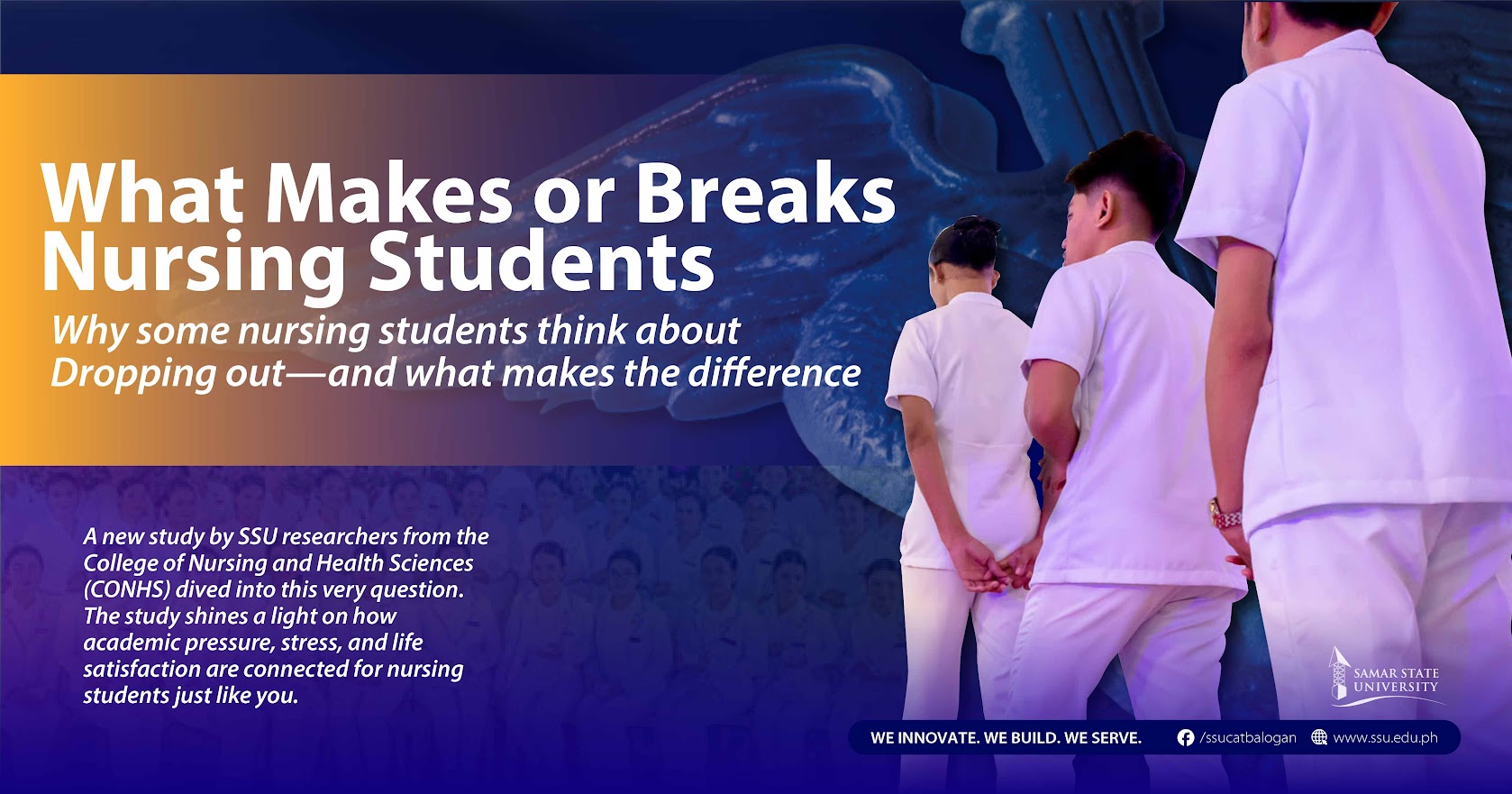
[Featuring published academic paper: “How academic pressure drives dropout intentions: The mediating roles of life satisfaction and stress in nursing students” authored by Dr. Leodoro J. Labrague (former SSU faculty member), Dr. Rheajane A. Rosales, Dr. Dolores L. Arteche, Maria Caroline Santos, Nemia De Leon Calimbas, Begonia C. Yboa, Jeanette B. Sabio, Charmaine R. Quiña, Lawrence Quincy Quiño, Mary Ann Apacible; DOI: https://doi.org/10.1016/j.teln.2024.11.006)
Nursing school is tough. Long hours. Heavy workloads. Tests and clinicals that hit hard. But what exactly makes some students think, “Maybe I should just quit?” A study by SSU researchers from the College of Nursing and Health Sciences (CONHS) dived into this very question. The study shines a light on how academic pressure, stress, and life satisfaction are connected for nursing students just like you.
The team surveyed 977 nursing students from three Philippine nursing schools to understand how academic pressure influences the desire to drop out. They focused on three key factors: academic pressure (how much school feels like a burden), life satisfaction (how happy students feel with their life overall), and stress levels (how overwhelmed or tense students feel).
Here’s What They Found
One: Most nursing students feel moderate pressure. It’s not just you—a lot of students feel the weight of nursing school, especially in the early years.
Two: More pressure = lower happiness. When students feel academically overwhelmed, their sense of satisfaction with life drops.
Three: Lower life satisfaction leads to higher stress. Feeling unhappy or stretched thin makes stress climb. Of course, not surprising, right?
Four: Higher stress = stronger thoughts about quitting. In other words, the more stressed and unhappy you feel, the more likely you are to consider dropping out.
It’s like a chain reaction: pressure leads to less happiness, leads to more stress, and form your thoughts about quitting. Imagine this: you are juggling assignments, clinical hours, exams, perhaps work or family responsibilities. You start to feel drained and less excited about anything outside school. So, it’s easy to see how that stress snowballs. This study helps put words to what many students silently struggle with. And even better, it points us toward how schools can support students before they get to that breaking point slot maxwin.
Nursing schools can do more than just teach; they can help students thrive. According to this study, by recognizing that life satisfaction and stress play a big role in whether students stay or leave, schools can:
- Offer stress-management workshops
- Provide counseling and peer support groups
- Create learning environments that boost overall student happiness
- Build resilience tools early in the program
Overall, this study also connects to global goals we all care about. In support of SDG 3 (Good Health and Well-Being), schools can support healthier lives for future nurses slot thailand who are, in turn, essential to healthcare systems everywhere by understanding student stress and well-being. Further, in contribution to SDG 4 (Quality Education): reducing dropout intentions advances inclusive and equitable education, keeping students in school so they can finish strong and contribute meaningfully to their professions and communities.
Supporting nursing students today leads to stronger health systems tomorrow—and that benefits everyone. If you want to read the full research, you may click here: https://doi.org/10.1016/j.teln.2024.11.006